Mining games may look similar on the surface, but they can offer very different experiences.
Some put you in control of mining equipment, where you operate machinery, extract resources, and explore detailed environments. Others focus on automation, resource production, and building a mining operation that grows over time.
So, which is better for your playstyle: a traditional mining simulator or an idle mining game?
The answer depends on how much direct control you want, how you enjoy making progress, and whether you prefer hands-on tasks or long-term resource management.
What Is a Mining Simulator?
A traditional mining simulator is a mining game that emphasizes direct interaction with equipment, resource extraction, and managing mining operations.
Instead of relying mainly on automated production, you take an active role in the work.
How Traditional Mining Simulator Games Work
In mining simulator games, you operate tools and machinery to extract materials from the ground.
Depending on the game, this can involve drilling, digging, transporting resources, and managing equipment. On top of that, some games aim for realistic mining processes and immersive environments.
Common Features of Mining Simulator Games
Most mining simulator games combine interactive tools, exploration, and resource collection.
You may discover new deposits, operate different machines, sell extracted materials, and upgrade equipment to improve your operation.
Examples of Mining Simulator Games
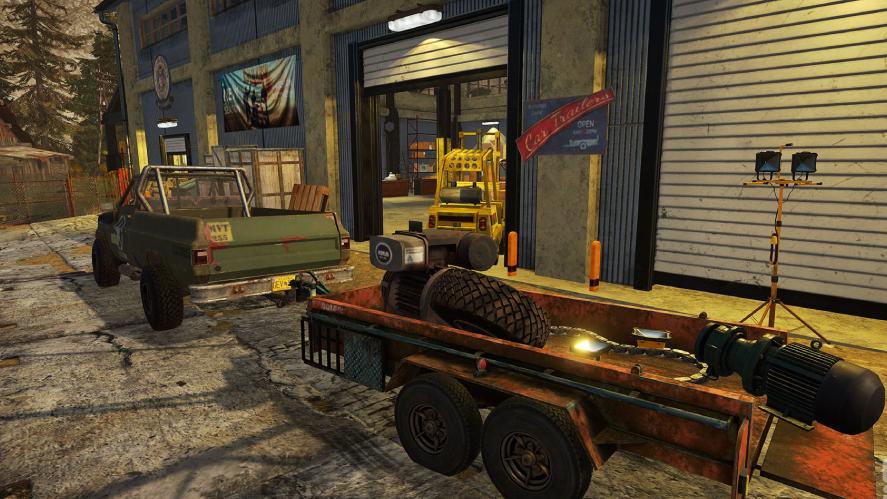
Gold Mining Simulator, formerly Gold Rush: The Game, is a good example of a hands-on mining simulator. It focuses on operating realistic mining machinery, extracting gold, and managing a mining operation.
Other mining games take a more casual approach, with simpler digging mechanics, faster upgrades, or less emphasis on realism.
The genre covers a wide range of experiences, so not every mining simulator game plays the same way.
What Are Idle Mining Games?
An idle mining game focuses on automated resource production and gradual growth rather than constant hands-on mining.
You build a mining operation, invest in upgrades, and unlock systems that collect resources with less direct input. This makes idle mining a popular subgenre of clicker games and incremental games.
Understanding Idle Mining Gameplay
You start with a small operation and gradually expand it by upgrading equipment, hiring miners, and increasing production.
Resources accumulate over time, giving you more materials or money to reinvest in further upgrades. Some games also provide offline progress while you’re away.
How Idle Mining Games Differ From Traditional Simulators
Unlike a traditional mine simulator, idle mining games rarely require you to operate every machine yourself.

Instead, you focus on production efficiency, upgrade priorities, and deciding where to invest your resources.
Popular Features in Idle Mining Games
Common features of idle mining games include automated miners, resource accumulation, upgrade systems, and unlockable areas or buildings.
As your operation grows, you gain access to new resources and more powerful production systems, creating a long-term progression loop.
Mining Simulator vs. Idle Mining Games: Key Differences Explained
The biggest difference between a traditional mining simulator and an idle mining game is how you interact with your mining operation.
One emphasizes hands-on activities, while the other focuses on automation and steady growth.
| Feature | Traditional Mining Simulator | Idle Mining Game |
|---|---|---|
| Gameplay | Direct interaction | Automation and management |
| Player involvement | Often frequent | Often intermittent |
| Main challenge | Operating equipment and managing mining tasks | Optimizing production and upgrades |
| Progression | Missions, machinery, mining operations | Incremental growth and unlocks |
| Automation | Varies by game | Central gameplay feature |
| Typical sessions | Longer active sessions | Flexible, shorter check-ins |
| Player appeal | Immersion and direct control | Efficiency and long-term growth |
Active Gameplay vs. Automated Mining
In a traditional mining simulator, you perform many tasks yourself. Your actions directly affect how the operation runs.
Idle mining games shift much of this work to automated systems. Miners and machines collect resources while you focus on hiring workers, upgrading production, and expanding your operation.
You still make decisions, but you don’t need to control every mining task.
Realistic Mining Mechanics vs. Incremental Progression
Traditional simulators often emphasize realistic equipment, mining processes, and environmental details. Progress may depend on completing tasks, improving machinery, and managing your operation.
Idle mining games usually take a more simplified approach.

Instead of recreating real mining procedures, they use upgrade systems that increase production, unlock new resources, and expand your operation over time.
Time Commitment and Playing Habits
Hands-on mining simulators generally suit players who enjoy longer sessions and want to stay involved in the action. On the other hand, idle mining games offer more flexibility.
You can check your production, purchase upgrades, and leave the game running or return later, depending on its offline progression mechanics.
Resource Management and Strategic Decisions
Both genres involve resource management, but the decisions differ.
In a traditional simulator, you may need to manage equipment, fuel, storage, and the flow of extracted materials.
In idle games, you focus more on how to spend resources, which upgrades to prioritize, and how to remove production bottlenecks.
Progression, Rewards, and Player Satisfaction
Traditional simulators reward you for completing mining tasks and operating equipment effectively.

Idle mining games offer satisfaction through visible growth: production increases, new areas unlock, and your automated systems become more powerful.
Neither approach is inherently better. It depends on whether you prefer hands-on achievements or watching a mining operation grow through strategic upgrades.
Is an Idle Mining Game Easier Than a Traditional Mining Simulator?
Idle mining games are often easier to pick up because they require fewer direct controls. However, that doesn’t mean they have no challenge.
The difficulty depends on how much the game asks you to manage and how complex its progression systems become.
Learning Curve and Controls
Traditional simulators can take time to learn because you need to understand equipment controls and how different mining tasks work together.
Idle mining games usually have simpler controls, making it easier to start playing without learning complicated machinery.
Strategic Complexity in Idle Mining Games
However, simpler controls don’t mean there’s nothing to figure out. Idle games can become more demanding as you unlock new systems and face tougher upgrade decisions.

Spending resources on the wrong improvements or neglecting a production bottleneck can slow your progress.
Which Genre Is Better for Beginners?
If you want to start mining immediately without managing complicated controls, an idle mining game is often the easier choice.
If you enjoy learning equipment and getting directly involved in each task, a traditional simulator may be more rewarding.
The better starting point depends on whether you prefer managing progress or performing the work yourself.
Can Mining Simulator Games Also Be Idle Games?
Yes, a mining simulator can include idle mechanics, and an idle mining game can offer more than automated resource collection.
These labels describe different parts of gameplay, so a game doesn’t have to fit neatly into just one category.
Why Mining Simulation and Idle Mechanics Can Overlap
Mining simulation describes the activities and systems a game recreates, while idle game mechanics describe how players make progress.
A game can simulate running a mining operation while letting automated miners and machines handle resource production.
How Hybrid Mining Games Combine Both Styles
Hybrid games let you switch between managing an automated operation and taking a more active role.
You might upgrade drills and production systems, explore new areas, collect rare resources, or make decisions that affect how efficiently your mine operates.

In these games, automation handles routine work, but your choices still shape progress.
Why Hybrid Gameplay Appeals to Different Players
This combination offers more flexibility than either approach alone.
Players can enjoy active exploration and meaningful decisions without having to perform every mining task manually.
At the same time, automated production keeps the operation growing between active sessions. It’s a good middle ground if you want both hands-on gameplay and idle progression.
Where Does Mr. Mine Fit Between Mining Simulators and Idle Mining Games?
Mr. Mine sits closer to the idle mining genre, but it adds exploration and active management to the experience.
Developed by Playsaurus, this game about mining combines automated resource collection with upgrades, discoveries, and new systems to unlock as you dig deeper.
Mr. Mine as an Idle Mining Simulator
You manage a team of miners while upgrading your drill to reach deeper underground. Resources accumulate as your operation runs, and you reinvest them in better equipment and new features.

This gives Mr. Mine the core loop of an idle mining game without limiting Mr. Mine gameplay to watching numbers increase.
Automated Mining With Meaningful Player Decisions
In Mr. Mine, automation handles much of the resource collection, but you still decide how to develop your mine.
You can upgrade drill components, manage miners, recruit Super Miners, and invest resources in buildings that support your progress.
Exploration, Relics, and Underground Discoveries
You can hire scientists to excavate hidden treasures, discover rare relics with useful bonuses, find chests, and unlock new buildings and gameplay systems.

These discoveries give you new goals beyond simply increasing production.
Why Mr. Mine Offers More Than Passive Mining
Mr. Mine combines idle progression with regular decisions and exploration.
You can let your miners collect resources, then return to upgrade equipment, manage your operation, and investigate new discoveries.
It’s a good fit for players who enjoy automated mining but still want reasons to stay involved.
Mining Simulator vs. Idle Mining Games: Which Should You Play?
The best mining game depends on what you want to do while playing.
Do you enjoy operating heavy machinery and handling mining tasks yourself, or would you rather build an operation that keeps producing resources automatically?
Here’s how to choose.
Choose a Traditional Mining Simulator If You Enjoy Hands-On Gameplay
A traditional mining simulator is a better fit if you want direct control over the mining process.
You’ll operate machinery, explore interactive environments, and handle tasks such as digging, transporting materials, and managing equipment.
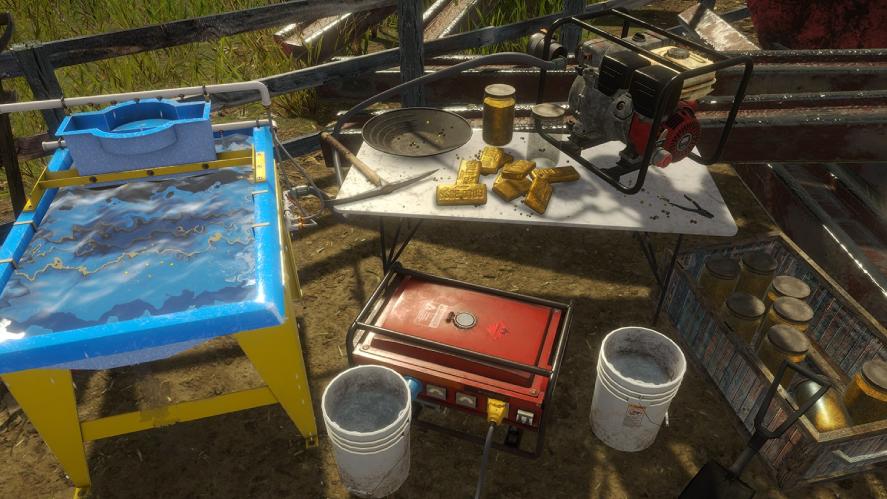
Games like Gold Mining Simulator suit players who enjoy getting involved in every stage of the operation.
Choose an Idle Mining Game If You Prefer Flexible Progression
Choose an idle mining game if you enjoy watching a small operation grow into a large one.
Automated production takes care of routine mining, while you focus on upgrades, resource allocation, and unlocking new features.
You can make progress through shorter check-ins instead of spending every session operating equipment.
Try a Hybrid Mining Game If You Want Both
If neither style fully matches what you want, try a hybrid.
Mr. Mine combines automated mining and incremental upgrades with underground exploration, scientists, relics, and strategic resource management.
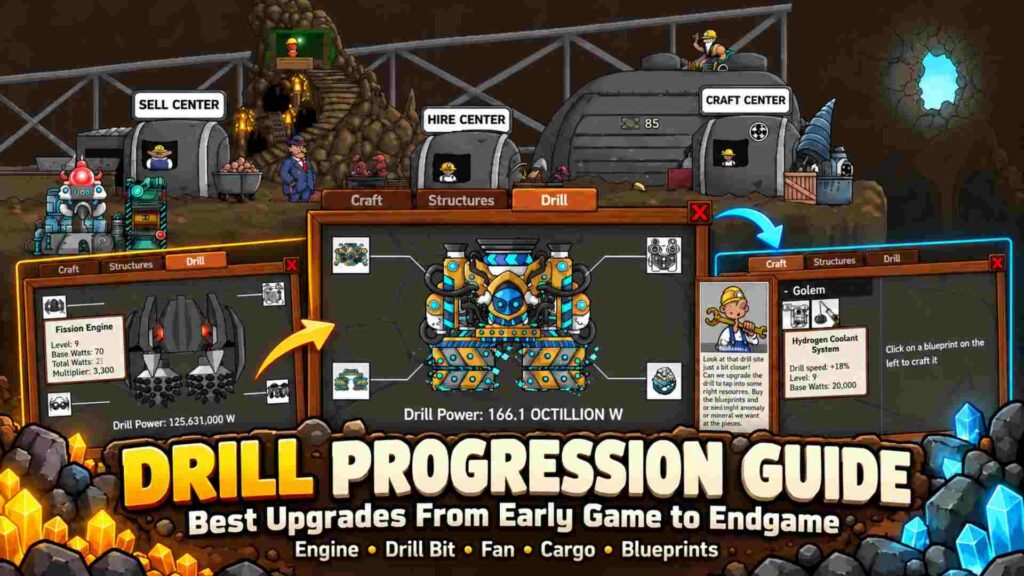
You don’t have to operate every machine, but there’s still plenty to discover and manage as your mine expands.
What to Look for When Choosing a Mining Game
Before choosing a mining game, look beyond its setting or graphics.
Gameplay Style and Level of Interaction
Decide how involved you want to be.
Do you prefer operating machinery and completing mining tasks, or managing an operation that works automatically? Some digging mining games offer a mix of both.
Progression and Upgrade Systems
Check how upgrades affect your progress. Good progression systems give you clear goals, meaningful improvements, and new areas or features to unlock.
Resource Management and Automation
Consider whether you enjoy planning how to spend resources, hiring workers, and improving production.
Automation can reduce repetitive tasks, but resource management should still give you interesting decisions.
Accessibility and Available Platforms
Check whether the game runs on your preferred platform, such as PC, browser, or mobile. Also consider its controls, system requirements, and price.
Long-Term Replay Value
Look for more than a quick upgrade loop. New mining areas, rare discoveries, unlockable systems, and challenging milestones can give you reasons to keep playing.
Frequently Asked Questions About Mining Simulators and Idle Mining Games
A traditional mining simulator focuses on hands-on activities, such as operating machinery, extracting resources, and managing equipment. An idle mining game automates much of this work. Instead, players focus on upgrades, resource production, and expanding their mining operations.
No, some mining simulator games aim for realistic machinery, mining processes, and environments. Others use simpler digging mechanics, cartoon graphics, or arcade-style progression. The term covers a broad range of mining games, so check the gameplay before choosing one.
Yes, a mining simulator can include automated miners, resource production, and offline progress. These mechanics can work alongside active exploration, equipment upgrades, and resource management. Hybrid games combine both styles rather than focusing entirely on manual or automated gameplay.
No, automation allows many idle mining games to collect resources without constant input. Some also support offline progress, so your operation can continue producing while you’re away. However, you’ll still need to return to purchase upgrades and manage your progress.
Not necessarily. Traditional simulators often involve equipment operation and managing mining tasks, while idle games require decisions about upgrades, resource allocation, and production efficiency. Both can offer strategic challenges, but they test different skills.
Mr. Mine is primarily an idle mining game. It features automated miners, drill upgrades, and incremental progression, alongside exploration, scientists, relics, and resource management. It suits players who want automated production without giving up active gameplay decisions.
Yes, several idle mining games are available to play for free in a web browser or through platforms like Steam. Mr. Mine is one option, offering automated mining, resource management, and underground discoveries without requiring an upfront purchase.
Finding the Right Mining Game for Your Playstyle
Traditional mining simulators and idle mining games offer different ways to enjoy the mining experience.
If you like operating machinery and controlling each task, a hands-on mining simulator may be the better choice. If you prefer automation, incremental upgrades, and steady progression, an idle mining game may suit you more.
You don’t have to choose between the two styles, either. Games like Mr. Mine combine automated production with resource management and underground exploration.
Curious about idle mining gameplay? Try Mr. Mine for free and discover how far your mining operation can grow!